
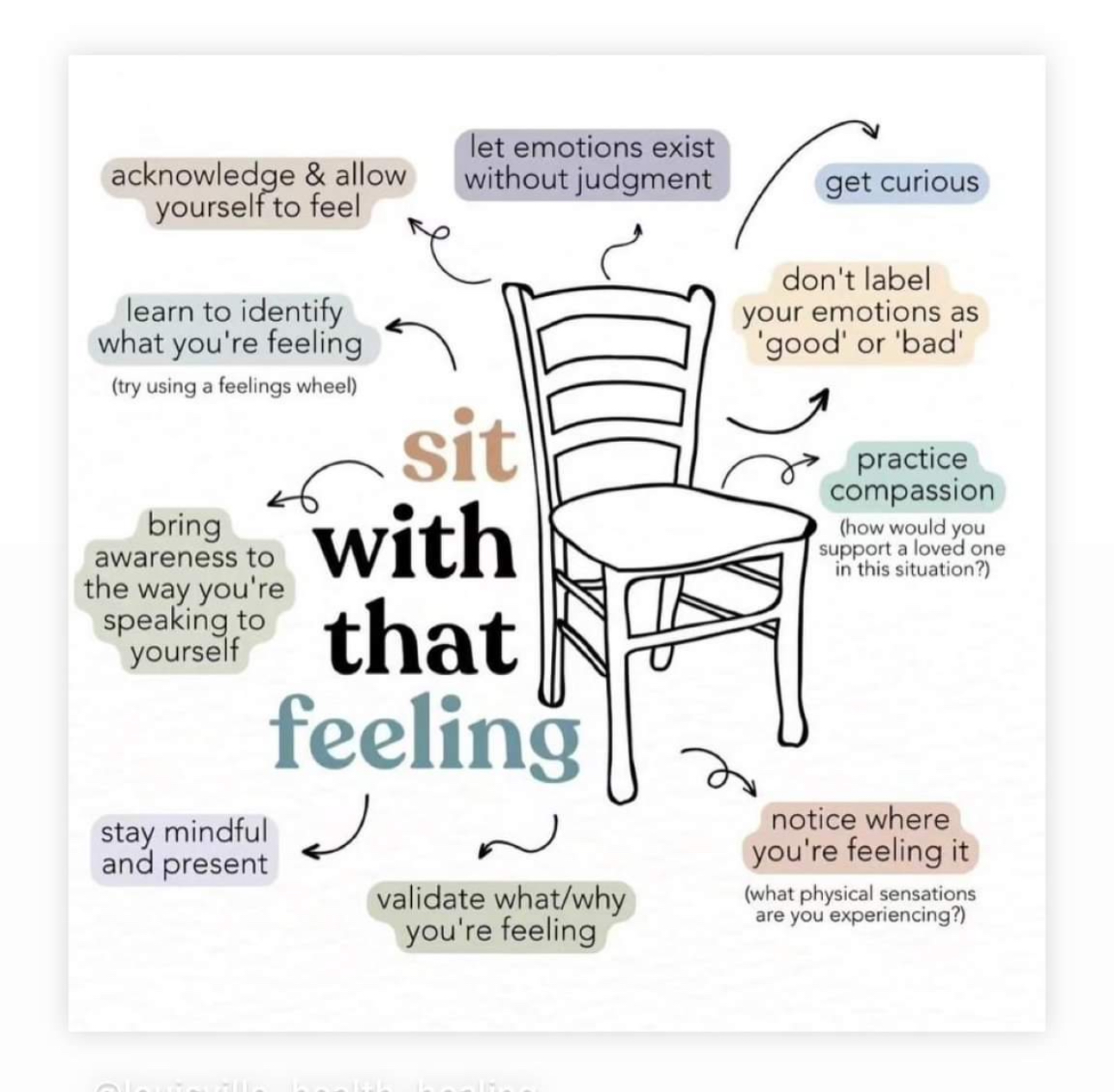
Not long ago, I found myself in the middle of a day that should have felt ordinary, yet an unexpected wave of sadness washed over me. It wasn’t tied to any specific event or story, but there it was—sitting quietly, waiting to be noticed. In the past, I might have brushed it off, hurriedly distracting myself with tasks or reasons not to feel it. But this time, I chose a different path. Instead of running away from it, I found a quiet place to simply be with it.
As I settled into that moment, I let the sadness take up space without labeling it. It wasn’t “good” or “bad,” it just was. What if this emotion had something to reveal to me? This curiosity felt soft, almost like a whisper, gently guiding me toward a deeper understanding. I noticed a tension in my chest and a pit in my stomach. And instead of asking why the feeling was there to begin with, I asked, “What are you trying to show me?”
With time, the answer surfaced—it was a reminder of how unseen I had felt in a recent experience. This insight didn’t immediately change anything, but it made me pause. In the past, I might have ignored this signal, missing the opportunity to connect with myself in a meaningful way.
A Gentle Exploration
There’s something delicate about allowing ourselves to simply feel—without rushing to fix or name our emotions. It’s like creating a little space inside ourselves where every emotion, even the uncomfortable ones, are welcome for a while. And as we do, something unexpected can happen. The feeling begins to shift—not necessarily fade, but change.
Curiosity opens doors. When we ask, “What is this feeling trying to tell me?” we’re not demanding answers. Instead, we’re giving ourselves permission to explore. Sometimes sadness carries us back to moments where we’ve felt unseen or unheard, as it did for me. At other times, it might point to something subtler—a need, a desire, or a boundary that’s been overlooked.
But we can only hear what our emotions have to say if we’re willing to sit with them. Without rushing. Without judgment.
Reflection Prompt
What might your emotions reveal to you if you simply allowed them to exist, without the need for immediate answers?
The Subtlety of Self-Compassion
In that moment of sadness, I asked myself: How would I respond if a friend were feeling this way? The answer was obvious—I’d be kind. I’d listen. I’d remind them it’s okay to feel sad, that it’s part of the ebb and flow of being human. So, I did the same for myself. And the shift was subtle but profound. The sadness no longer felt like something to battle against, but a quiet visitor with something to share.
Compassion towards ourselves is often harder than it seems. We’re so quick to extend understanding to others but tend to be harsh and impatient when it comes to our own emotions. What if we could offer ourselves the same softness we so easily give to others? This simple act can change how we experience our inner world.
Reflection Prompt
How might your relationship with yourself change if you offered the same compassion to yourself that you would to a loved one?
Shifting Our Inner Language
As I sat with that feeling, I noticed something else—the way I spoke to myself. In the past, I might have said, “Why are you feeling this way? You should be stronger than this.” But this time, I allowed a gentler voice to emerge: “It’s okay to feel this. It’s part of your experience right now.” That small shift in language created a sense of relief, as if I didn’t need to hold everything together so tightly.
We often don’t realize how much our internal dialogue shapes our emotional landscape. A simple shift in the words we use with ourselves can turn self-criticism into self-acceptance. And when we begin to speak to ourselves with kindness, the tension within softens.
Reflection Prompt
What would change if you shifted your inner dialogue from criticism to kindness?
Listening to the Body’s Signals
Another layer of understanding came when I tuned into my body. I noticed that sadness wasn’t just an abstract feeling in my mind—it lived in my chest, and in the pit of my stomach. By bringing awareness to these sensations, I felt more present, more grounded in my experience.
Our bodies often carry the weight of our emotions long before our minds recognize them. By paying attention to these physical sensations, we can access deeper levels of awareness. It’s as if our bodies are speaking a language of their own, one that can guide us toward insights our thoughts might overlook.
Reflection Prompt
The next time you feel a strong emotion, where do you notice it in your body? How might tuning into that sensation give you a deeper understanding of what’s happening inside?
Conclusion
Perhaps the most important thing I learned that day was this: emotions, even the uncomfortable ones, don’t need to be fixed. They don’t need to be understood immediately. They just need space to exist. When we allow that space, we often find that our emotions soften, that they reveal layers of truth we might not have expected. And in this way, sitting with our feelings becomes an act of honoring ourselves.
This practice of allowing, of being present with whatever arises, is an invitation into authenticity. It’s an acknowledgment that being human means experiencing the full range of emotions—not just the ones that feel “good.” Sadness, joy, anger, and peace—they’re all part of our inner landscape, each with its own wisdom to offer.
Final Reflection Prompt
How might giving yourself permission to experience the full range of your emotions lead to a deeper sense of authenticity in your life?



 a YOUthenticity Blog
Leave a comment